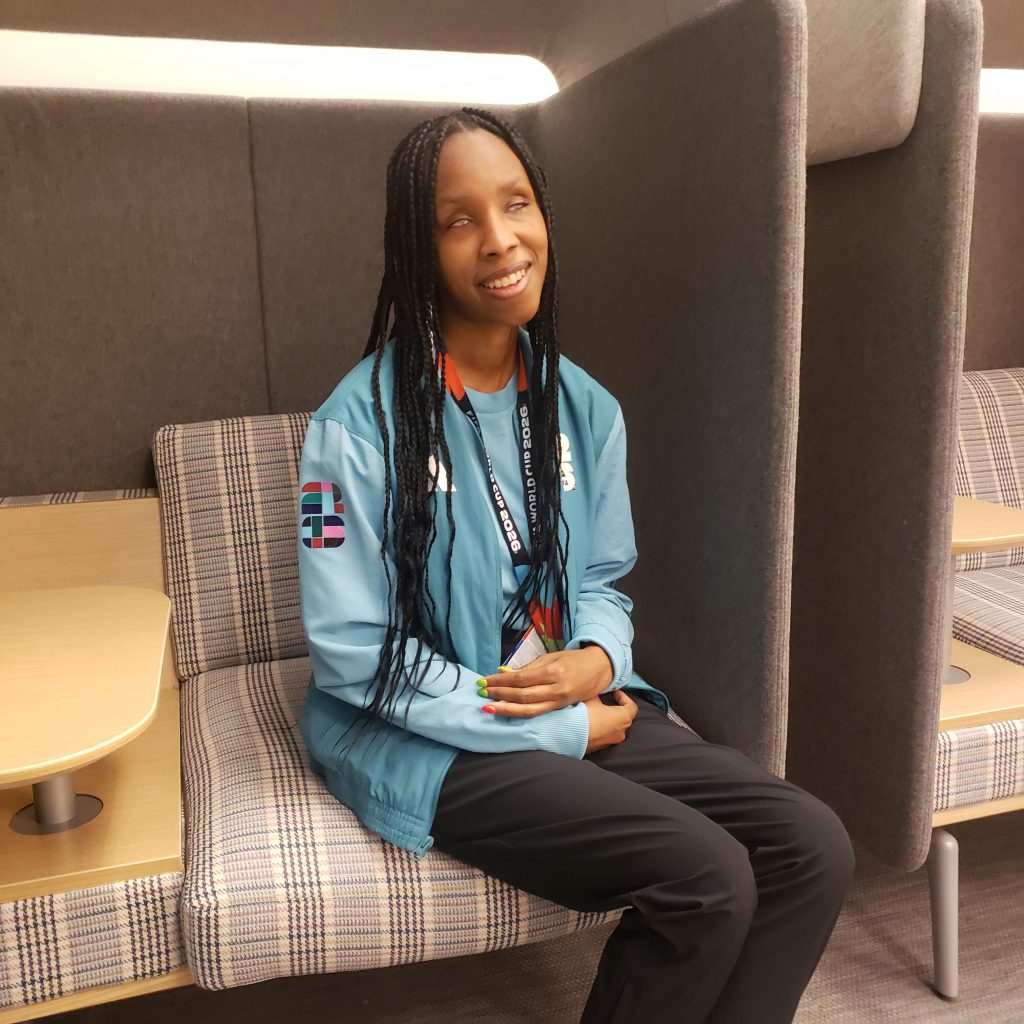
Mad Men fans might remember a line from that show, “Create the job you want and be the one to fill it.” You could say that’s the motto of FIFA Accessibility Coordinator Natalie Gross, who has devoted much of her career to developing a new discipline of making accessible to people with disabilities things that most people take for granted — specifically, sports events.
She got into this profession – you might say created this profession – out of her own experience as a blind person.
“When I graduated from college, there wasn’t a lot of opportunity for people with disabilities,” Gross said. “If you have a disability, you have to be your own advocate. So I started reaching out and networking with people in industries I wanted to work in, and working with those people on how we create more representation for people with disabilities.”
Gross has been in the business of making events more accessible to people with disabilities for 10 years, and for the last five, she has been focused on major events.

“I like doing big events and figuring out how to get every type of fan into the building with dignity and respect, and for them to have a good experience,” she said.
FIFA’s Fan Operations gave Gross the assignment of ensuring an excellent experience for every fan, she said.
“A few years ago, we started to work on what you see here today,” said Gross.

For the first time, all World Cup matches now include sign language commentary in both English and LSM (Lengua de Señas Mexicana). There’s also Audio Descriptive Commentary — additional description that includes body language, expressions and movements. Both are available on mobile phones.
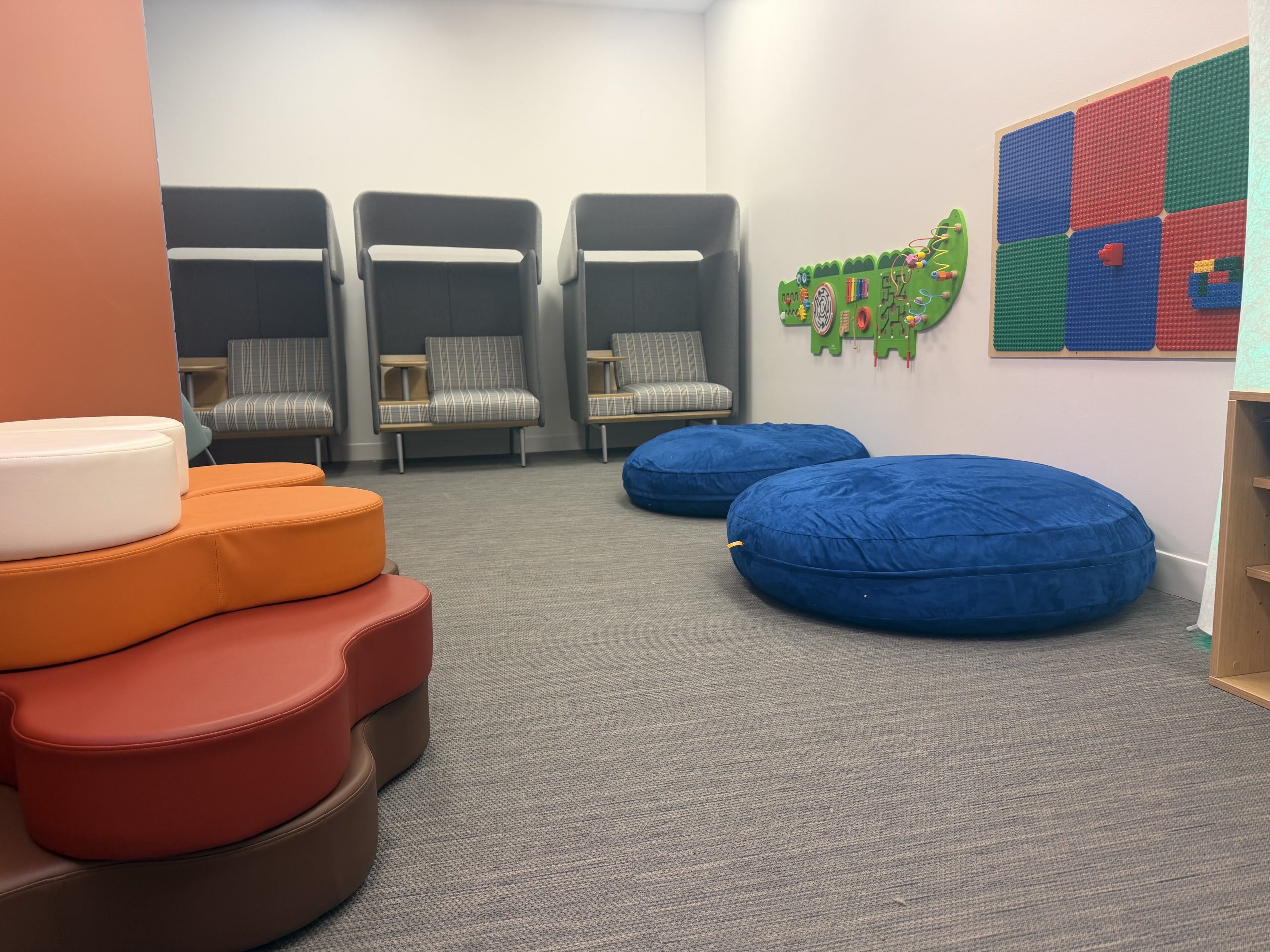
The 2026 World Cup is also one of the first major sporting events to include accommodations for people with sensory processing disorders — hypersensitivity, sensory-seeking (repetitive touching, rocking) — that often accompany autism and anxiety disorders. FIFA has introduced sensory rooms in all stadiums and fan experience zones to provide respite for fans who can become overstimulated or overwhelmed.
These rooms offer quiet, pastel surroundings and comfortable seats. Sensory bags are provided with noise-canceling headphones, fidget toys and other calming objects for fans to use during matches.
Gross hopes that today’s novelty will become tomorrow’s standard. Accessibility for people with disabilities, she says, is a matter of human rights, not simply courtesy.
“My goal is for these things to be adapted across the industry,” she said. “As a blind person, I’m privileged and honored to have this position and create space for other blind individuals to have careers in sports.”
As a World Cup venue, Levi’s Stadium had these in place for the games. The 49ers say they’re committed to “continuous investments in improvements that ensure every guest can comfortably enjoy our events.” While Levi’s Stadium already exceeds ADA seating requirements, a recently approved $1.5 million project will add more ADA seating.
Silicon Valley Voice’s World Cup Coverage:
Photo Gallery: Fans Watch U.S. Men Win in Santa Clara; Advance to Round of 16 in FIFA World Cup
Excitement for USA World Cup Match Palpable at Levi’s Stadium
From Football Gridiron to Soccer Pitch: Santa Clara’s World Cup Stadium Transformation
Photo Gallery: Australia, Paraguay Fans Show up for Final Group Match at Levi’s Stadium
Security at Levi’s Ramps up for World Cup
Photo Gallery: Jordan Algeria Match Creates a Lifetime of Memories
Bay Area Welcomes Jordan Fans as Team Makes First World Cup Appearance
Photo Gallery: World Cup Sell Out in Santa Clara Thrills Paraguay, Türkiye Fans
Paraguay Upsets Türkiye and Sends Fans Home Happy
Photo Gallery: Jordan, Austria Meet in FIFA World Cup
Fans Bring the Energy as FIFA World Cup Action Arrives at Levi’s Stadium




0 comments