


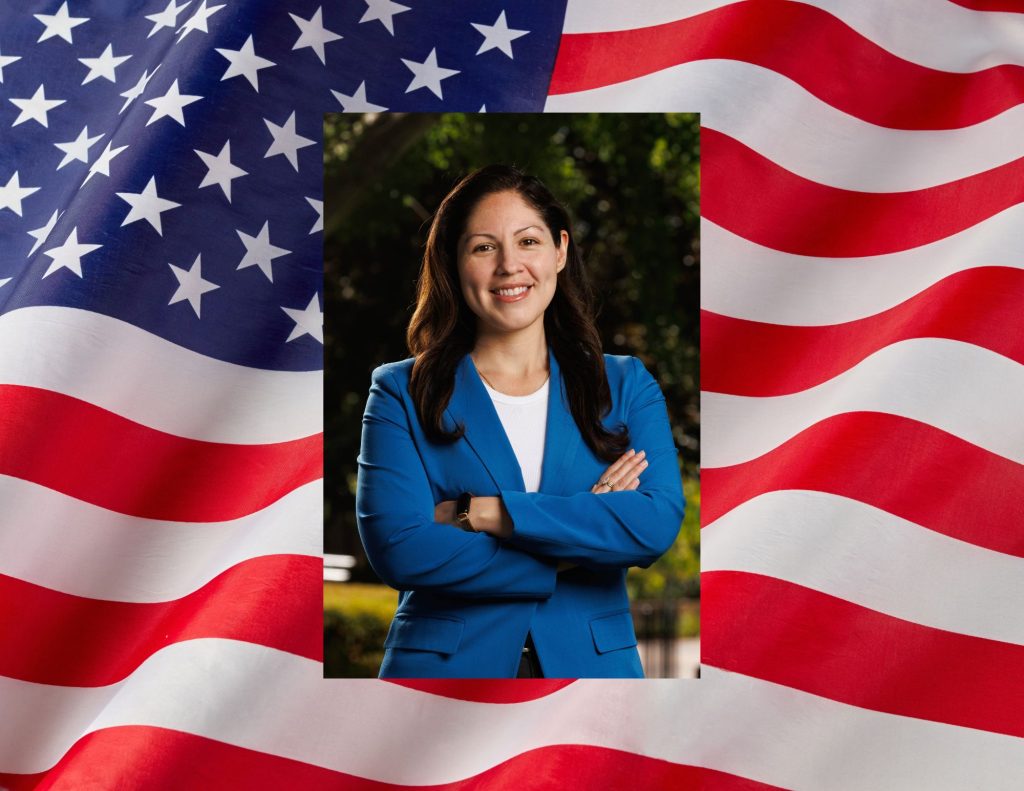
With a full slate of candidates, The Weekly wanted to give voters insight into each candidate’s position on a slew of issues we believe matter most to Santa Clarans.
Consequently, we asked them seven questions, giving them the flexibility to answer as many as they wanted. We limited their responses to 1,000 words (allowing a bit of flexibility for how disparate word processors count words). Their responses appear verbatim.
The Silicon Valley Voice will roll out each candidate’s answers in the days leading up to the election.
How do you think the city handled the Super Bowl and the FIFA World Cup this year? If you were on the city council, what would you have done differently? How would you balance the desire to have more events like these at Levi’s Stadium with neighborhood impacts?
Overall, the city did a good job hosting the Super Bowl and the FIFA World Cup this year. Events of this scale bring meaningful economic benefits to our region, and Santa Clara demonstrated it can host them safely through strong coordination with neighboring cities and agencies like VTA and BART on transit and public communication. That regional partnership is worth continuing.
Where I see room for improvement is on the neighborhood side. Traffic, noise, and public safety concerns for residents near Levi’s Stadium deserve more than an after-the-fact response. As a council member, I would ensure a clear mitigation plan is in place before every major event, one that addresses these impacts directly and gives neighbors a genuine voice in how future events are planned.
Over the past ten years, the city has added lots of housing but has floundered with respect to public amenities and infrastructure (the swim center is in disrepair, the convention center is falling apart and the BMX Park is slated to move, just to name a few). What more should the city be doing to prevent the loss of — or add more — public amenities and find a better balance between housing and public amenities, without asking residents to approve another $400 million bond measure?
Public amenities and services are essential to Santa Clara’s quality of life, and too many have been allowed to deteriorate, our swim center, our convention center, and the BMX Park among them. We need to do a better job maintaining what we have and finding smarter ways to fund it.
As someone who works in government relations, I’ve built relationships with local leaders across different levels of government and municipalities. I’d put that experience to work for Santa Clara, using those relationships to help the city compete for state and federal funding for capital improvements rather than relying solely on local bond measures, through grants, public-private partnerships, and regional funding streams built for this kind of infrastructure.
According to Silicon Valley At Home, while Santa Clara does well to meet its Regional Housing Needs Allocation (RHNA) numbers for Low Income and Above Moderate Income households, it struggles to create housing for low-income households. What should the city do to create PERMANENT spaces for the poorest Santa Clara residents?
Having grown up in a working-class family, I understand this challenge firsthand. Our region is among the most expensive in the country, with rising rents, mortgages, home insurance costs, and everyday expenses. For many residents, one missed paycheck is the difference between stable housing and homelessness.
I support expanding permanent supportive housing, a model that pairs affordable, long-term housing with on-site case management, job training, and mental health services, so residents have a real path to stability rather than housing alone. Santa Clara already has two local examples of this working: Kifer Senior Apartments, where more than half of its 80 units house seniors who were previously experiencing homelessness, and Calabazas Community Apartments, where roughly 80 of its 145 units are set aside for people experiencing homelessness, both paired with on-site support services.
At the same time, the state has spent billions on homelessness, yet we still don’t have a clear picture of what’s actually working. Santa Clara needs to hold itself accountable by tracking outcomes, both quantitatively and qualitatively, while continuing to build on this model for our most vulnerable residents.
Silicon Valley Power has increased rates six times since January 2022 as the utility continues to expand. Would you like to see this expansion continue? With more data centers than ever, do you think SVP’s trajectory is in the best interest of residents?
With the cost of living so high, it’s important that we do everything we can to keep utility costs manageable for Santa Clara residents. Silicon Valley Power remains significantly more affordable than services like PG&E in neighboring cities, where residents pay a premium for power. I support SVP’s continued expansion, but the utility needs to keep residents, not data centers, at the center of its planning and rate decisions going forward.
Name some issues on which you would have voted differently from your predecessor and some that you would have voted the same. Explain why.
Where I would have voted differently: I would have voted against setting aside $20.35 million for a new Civic Center Campus before the city even picked a location. A spending decision this large shouldn’t happen without giving residents a clear, upfront look first. Committing millions of taxpayer dollars before a site is chosen makes it feel like the decision was already made behind closed doors. I would have voted to hold that money in reserve until the city held a real public workshop, so residents could weigh in on all the options, including much-needed investment in downtown.
Where I would have voted the same: I agreed with Council Member Raj Chahal’s vote against moving City Hall to an office park on the northern edge of town. No one disputes that our civic facilities need modernizing, but relocating City Hall away from the center of the city would make it harder to reach for older adults, people with disabilities, and anyone who relies on public transit or doesn’t have a car. Civic leadership belongs where residents can easily access it, not tucked away near an expressway.
How do you plan to balance neighborhood-specific advocacy with citywide budget and policy tradeoffs?
Santa Clara, like the state and many other cities across California, is facing a budget deficit, and growing economic uncertainty will only make that harder to manage. My highest priority as a council member would be to balance the budget and work hard to lower the deficit, while protecting the core services residents depend on every day, like public safety, street repair, parks and recreation programs, and library services.
That means listening closely to neighborhood concerns and advocating for them, while also being honest with residents about what the budget can support right now. Clear, straightforward communication builds trust.
What would you do to ensure that the Related project does not see another several years of delay?
The Related Santa Clara project across from Levi’s Stadium has remained in planning for nearly a decade. Every year it goes unbuilt, costs rise and the city forgoes housing, jobs, and revenue it needs.
As a council member, I would push for clear deadlines and accountability at every stage of the approval process, rather than allowing reviews to continue indefinitely. This includes regular public progress updates, working directly with the developer to resolve issues early, and ensuring city staff have the resources needed to move applications forward without unnecessary delay. The longer this project is delayed, the more it costs everyone, which is why keeping it on a firm timeline should be a council priority, not an afterthought.