


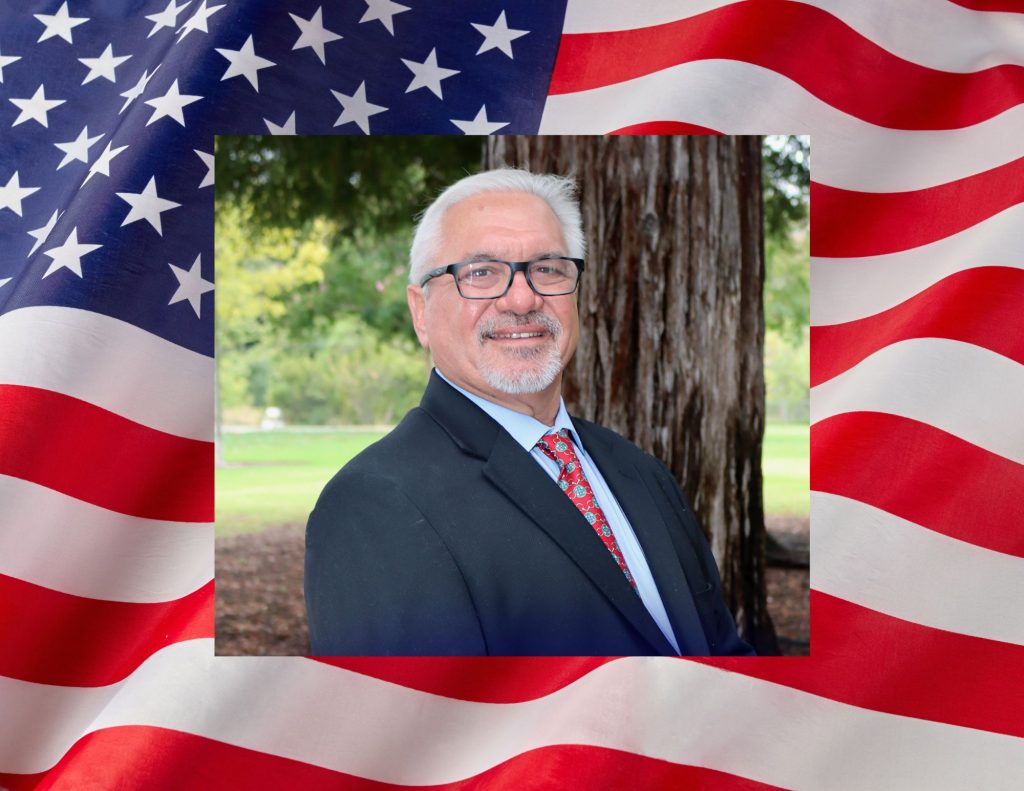
With a full slate of candidates, The Weekly wanted to give voters insight into each candidate’s position on a slew of issues we believe matter most to Santa Clarans.
Consequently, we asked them seven questions, giving them the flexibility to answer as many as they wanted. We limited their responses to 1,000 words (allowing a bit of flexibility for how disparate word processors count words). Their responses appear verbatim.
The Silicon Valley Voice will roll out each candidate’s answers in the days leading up to the election.
How do you think the city handled the Super Bowl and the FIFA World Cup this year? If you were on the city council, what would you have done differently? How would you balance the desire to have more events like these at Levi’s Stadium with neighborhood impacts?
I think the strained relationship between the Stadium Authority and stadium management contributed to a lack of communication and coordination among stakeholders. I would push for greater collaboration between the City, stadium management and event organizers such as the NFL, FIFA and NCAA. Santa Clara should do more than simply host these events—we should create a community experience around them. I would like to see entertainment and fan zones where residents and visitors can gather and enjoy these events. We can welcome more major events while addressing traffic, noise and neighborhood impacts through better planning and communication.
Over the past ten years, the city has added lots of housing but has floundered with respect to public amenities and infrastructure (the swim center is in disrepair, the convention center is falling apart and the BMX Park is slated to move, just to name a few). What more should the city be doing to prevent the loss of — or add more — public amenities and find a better balance between housing and public amenities, without asking residents to approve another $400 million bond measure?
As Santa Clara rebuilds and improves its infrastructure, we need to assess the life expectancy of those investments and budget accordingly for their long-term maintenance costs. New development must also be evaluated based on its impact on infrastructure and public amenities. We must address those impacts—and determine how they will be paid for—during the development approval process, not after construction has started or been completed. Growth should help pay for the demands it creates. We need to plan for housing, parks, recreation facilities, transportation and other infrastructure together rather than treating them as separate issues.
According to Silicon Valley At Home, while Santa Clara does well to meet its Regional Housing Needs Allocation (RHNA) numbers for Low Income and Above Moderate Income households, it struggles to create housing for low-income households. What should the city do to create PERMANENT spaces for the poorest Santa Clara residents?
Housing is a critical human need, particularly for our poorest and most vulnerable residents. I support transitional housing that provides people a pathway to permanent housing, as well as requiring meaningful low- and very-low-income housing opportunities within new market-rate and luxury developments. I do not believe the answer is to concentrate lower-income residents into separate communities. We should be building mixed-income neighborhoods where people of different income levels live together and have access to the same schools, parks, transportation and public services. Our housing policies should create permanent affordability while promoting economic and social integration throughout Santa Clara.
Silicon Valley Power has increased rates six times since January 2022 as the utility continues to expand. Would you like to see this expansion continue? With more data centers than ever, do you think SVP’s trajectory is in the best interest of residents?
Silicon Valley Power is one of Santa Clara’s greatest assets, and I support its continued expansion as necessary to meet the needs of our growing community and economy. However, expansion must not come at the expense of residents. SVP must remain committed to providing reliable power at rates substantially below surrounding utilities such as PG&E. Data centers are an important part of Santa Clara’s economy, but they must pay their fair share of the infrastructure and system costs their significant energy demands create. Growth should strengthen SVP and benefit its residential customers, not shift additional costs or risks onto them.
Name some issues on which you would have voted differently from your predecessor and some that you would have voted the same. Explain why.
I would have supported bringing the Super Bowl and FIFA World Cup to Santa Clara with strong protections for taxpayers. Where I would have differed most is in the approach—I believe the prolonged adversarial relationship surrounding the stadium has hurt communication and our ability to maximize the benefits these events bring to Santa Clara.
I would have joined Mayor Gillmor in supporting the elimination of field-use fees for nonprofit youth sports. I also believe keeping the International Swim Center available while pursuing a long-term solution was the right decision. Regarding a potential City Hall move, I agree that a decision of that magnitude should not move forward without significantly more public input.
How do you plan to balance neighborhood-specific advocacy with citywide budget and policy tradeoffs?
Every neighborhood deserves to have its concerns heard, but the Mayor has a responsibility to represent the entire city. I would make budget and policy decisions based on need, impact and fairness—not simply on which neighborhood has the loudest voice. Different parts of Santa Clara have different challenges, and those differences should be recognized, but we also have shared priorities such as public safety, infrastructure, parks and city services. My approach would be to engage neighborhoods early, listen to their concerns and then make decisions based on what provides the greatest long-term benefit to Santa Clara as a whole.
What would you do to ensure that the Related project does not see another several years of delay?
The Related project has tremendous potential, but after a decade Santa Clara residents deserve to see meaningful progress. As Mayor, I would establish regular meetings with Related, City staff and other stakeholders to identify obstacles early and keep the project moving toward clearly defined milestones. The City should process necessary approvals efficiently without compromising environmental, labor or community standards. We also need accountability on both sides—when delays occur, residents should understand why and what is being done to resolve them. Changing economic conditions are a reality, but continued communication, collaboration and accountability can help prevent another several years of unnecessary delay.