


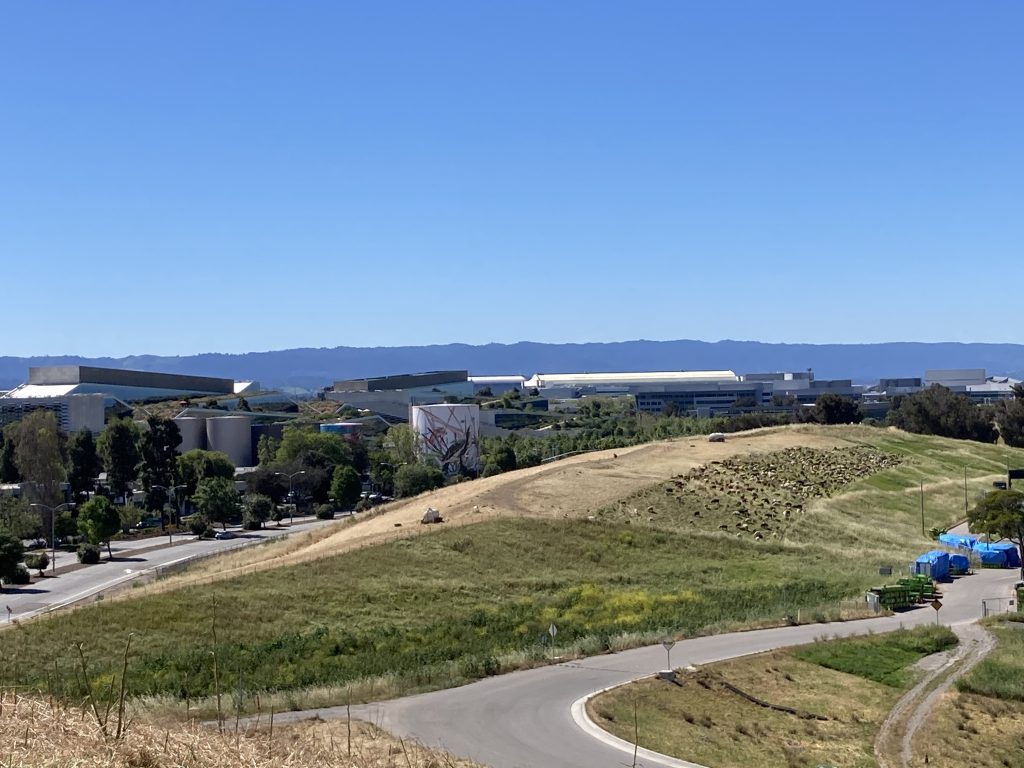
Sending a herd of goats to munch through overgrown vegetation isn’t a novel idea. It’s ancient history.
“Using livestock to clear vegetation for fear of fire was something Native Americans did,” said Terri Oyarzun, who co-owns Goats R Us with her husband. “It isn’t a new idea. Historically, it’s a very old practice.”
What’s new is the scale — and the demand. Goats R Us manages roughly 10,000 goats and deploys herds of between 600 and 1,000 animals at a time to sites across California, including the Sunnyvale Landfill on Caribbean Drive, where the company has become a fixture in the city’s vegetation management program.
Via the consent calendar, the city reupped its contract with Goats R Us earlier this year.


The arrangement grew out of a simple observation made about 20 years ago. Jennifer Garnett, Sunnyvale’s public information officer, wrote in an email. A former city environmental engineering coordinator came up with the idea to use animals at the closed landfill. After evaluating several grazing vendors, the city settled on Goats R Us.
It was an unconventional choice — grazing isn’t standard landfill practice — but Sunnyvale isn’t alone in making it. Western Placer Waste Management Authority landfill in Placer County and Kiefer Landfill in Sacramento County have adopted similar approaches, Garnett wrote.
The environmental case is straightforward. Grazing reduces reliance on fuel-powered mowers, cutting greenhouse gas emissions. And goats, naturally nimble, can navigate around the wells, piping and other equipment that dot a landfill’s surface — infrastructure that poses a real risk of damage to heavier machinery. Not to mention, they’ll eat almost anything.


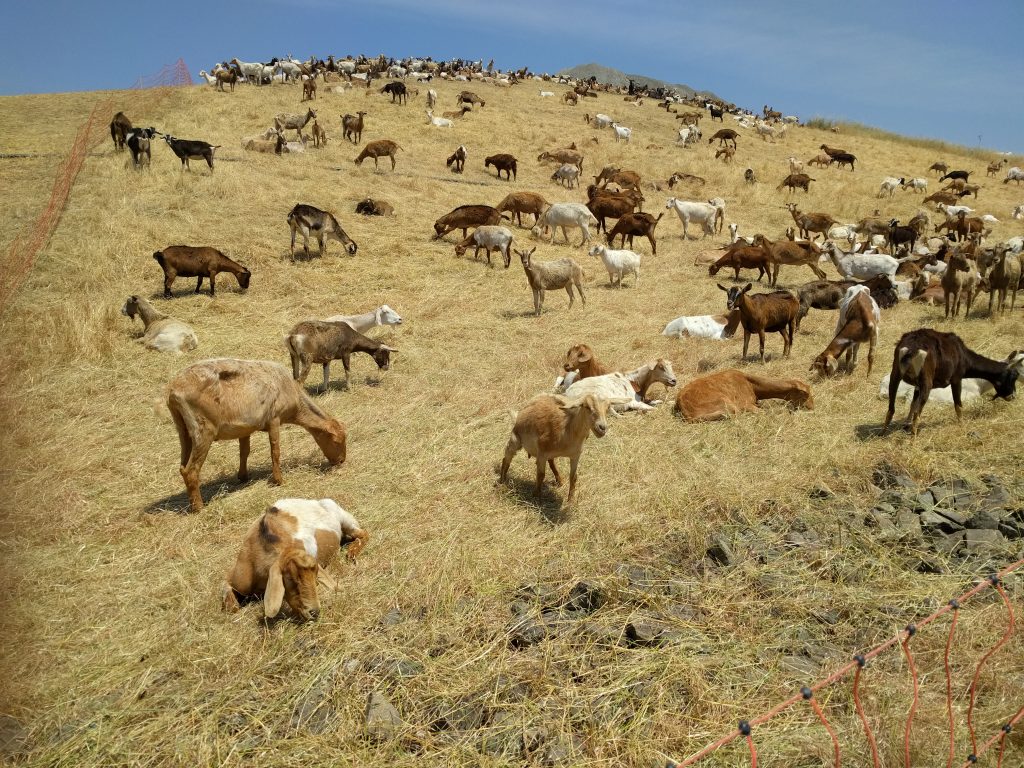
“The most green option is the grazing,” Oyarzun said. “[The goats] take it down, they take it away and they fertilize it … The green component is huge in this day and age. Anything green is really popular.”
Goats provide a natural aerating service as well, she added, a kind of all-in-one land management solution that’s hard to replicate with equipment or hand labor.
For Oyarzun, the work is more a philosophy than a business. Goats R Us does not cull its animals when they get too old to graze. Retired goats stay on the ranch or, occasionally, are placed with retirement communities.
That commitment to the animals reflects a broader vision for the company.
“We keep our animals until they die. I couldn’t do a typical rancher practice,” she said. “It isn’t a job; it’s a lifestyle … Retirement is not something that happens in this industry.”
The business remains a family operation. In recent years, Oyarzun said her and her husband’s roles have shifted toward administration and ranch improvements, with the next generation taking on more of the day-to-day work.
The public, she added, tends to feel the same way about the goats.
“The public sincerely enjoys them,” Oyarzun said. “It’s fun to have a herd of goats move into your backyard.”
In an era where environmental credibility matters, that goodwill isn’t incidental.
Contact David Alexander at d.todd.alexander@gmail.com