


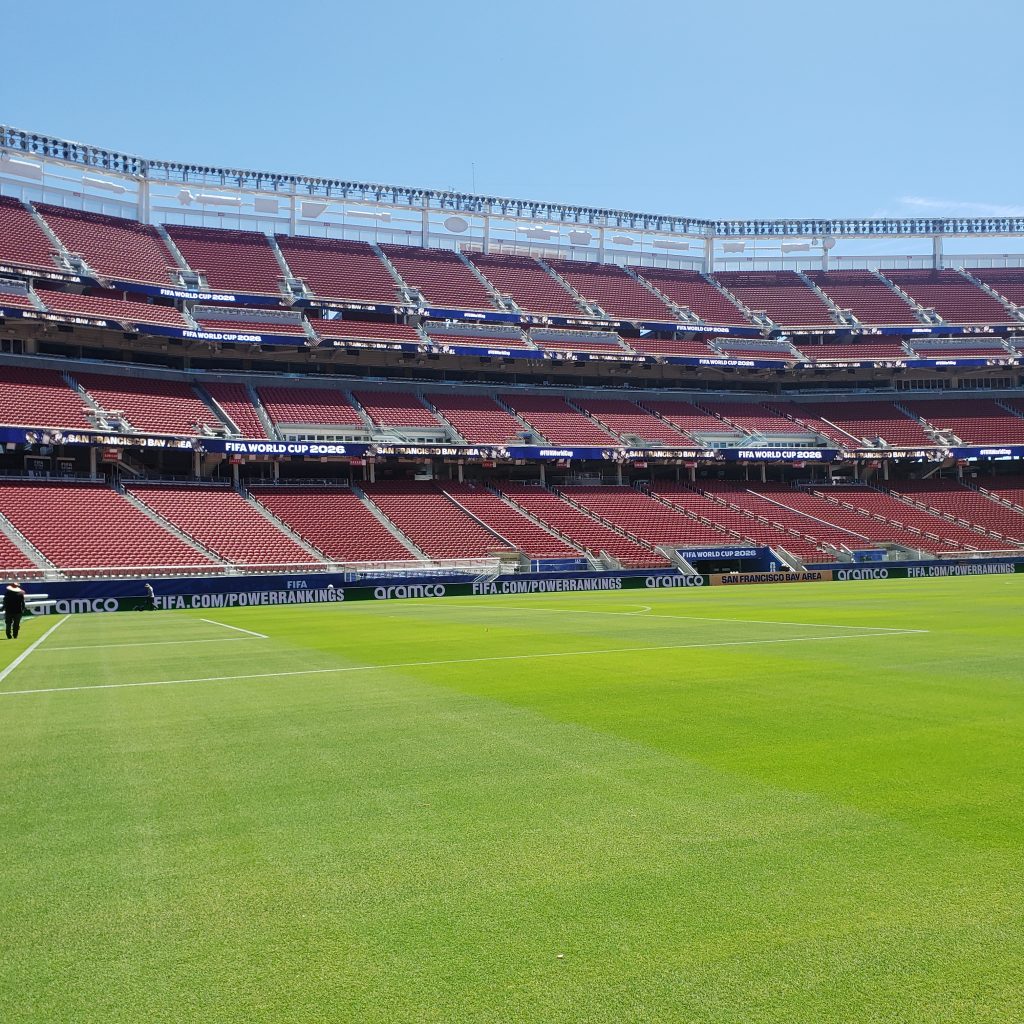
When Levi’s Stadium rose from a vacant lot on Tasman Drive, it wasn’t within imagination that a decade later the World Cup would be happening here. A Super Bowl — maybe. But the World Cup, the world’s biggest sporting event? The last time the World Cup came to the Bay Area was more than 30 years ago.
Yet this week, the unimaginable is very real. The first of six games in Santa Clara kicked off on June 13. But getting to this place required nothing short of a complete transformation of Levi’s Stadium into the San Francisco Bay Area Stadium.
The stadium handover to FIFA was what spokesman Jeroen Van den Beek called a “clean handover.”
The stadium was completely rebranded and reconfigured. There are new dressing rooms for teams and new broadcast infrastructure. Seats in the lower bowl corners were removed to accommodate the larger size of a soccer pitch. FIFA also installed its video referee, directly connecting on-field referees to officials in Dallas, who will monitor the play and can take a second look if calls are in question.


While changes this big may surprise Americans, Van den Beek said this is routine in international soccer.
“It’s been happening for 25, 30 years in the big European tournaments when the Confederation of Europe comes in, [it] takes over a stadium, rebranding with all the corporate sponsors, and make use of all the areas,” he said. “And for FIFA, this has also been a common practice for many years.”
The biggest change, however, is the turf.

All World Cup pitches must be natural grass, which FIFA describes as “the top standard FIFA pitch.” The stadium’s turf was completely torn out and replaced by hybrid stitched turf — synthetic fibers woven into the grass’s roots. The synthetic fibers increase playing surface durability while retaining the performance and player safety of grass.
The turf transformation at World Cup stadiums has reignited a simmering controversy between the NFL players’ union (NFLPA) and owners over field surfaces. Players have rated turf fields poorly in recent NFLPA report cards, and last month, the union posted a statement on X scolding NFL owners.*
“The 2026 FIFA World Cup kicks off in one month, and work is underway to install fresh grass surfaces in NFL stadiums for the world’s top soccer players. NFL players have spent years advocating for safer, high-quality grass fields at their place of work, but when the World Cup is [done the fields] will revert back to turf for the NFL season.
“Our players deserve workplaces that prioritize their preference, protect them against the weekly wear and tear of the game, and support their long-term health and performance.”
There have been discussions between the union and owners about replacing artificial turf with grass, but the closest thing to progress is enhanced standards for playing fields that will take effect in 2028.
*Levi’s Stadium has a natural grass field and players give it an A.
Carolyn Schuk can be reached at carolyn@santaclaraweekly.com.
Other World Cup Posts:
Bay Area Welcomes Jordan Fans as Team Makes First World Cup Appearance
Photo Gallery: World Cup Sell Out in Santa Clara Thrills Paraguay, Türkiye Fans
Paraguay Upsets Türkiye and Sends Fans Home Happy
Photo Gallery: Jordan, Austria Meet in FIFA World Cup